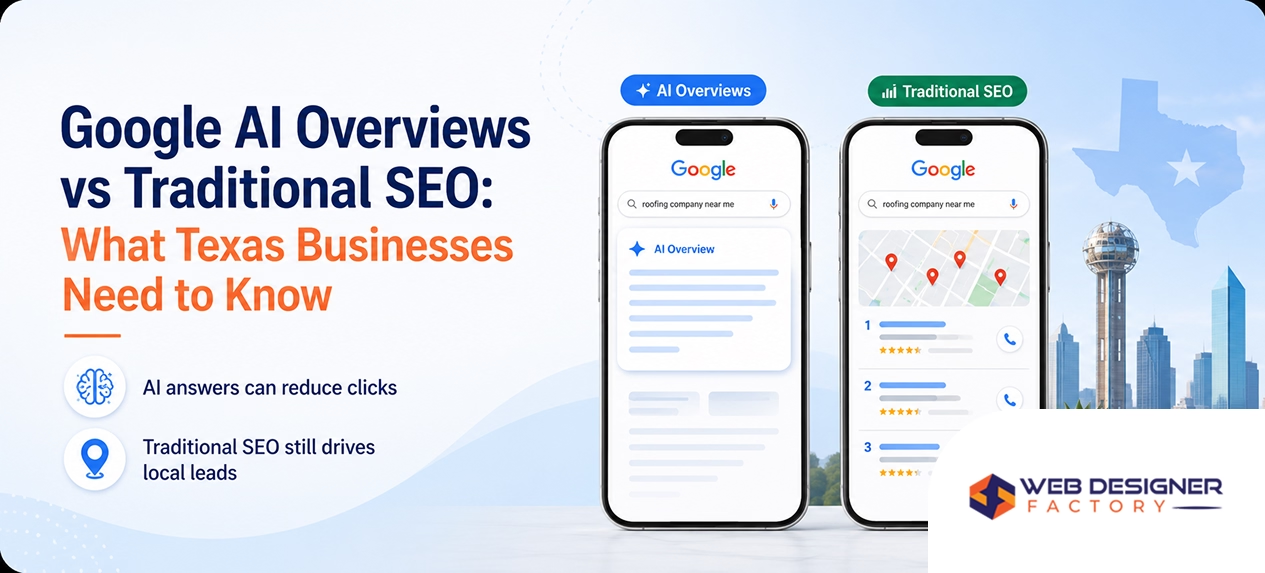


The way people find information online has fundamentally changed. AI search optimization 2026 represents a new discipline that every business must understand to maintain search visibility. While traditional search engines still matter, ai search engines like Google’s AI Overviews, ChatGPT Search, Gemini, Bing Copilot, and Perplexity now shape how your target audience discovers and consumes content.
These ai platforms use machine learning algorithms and natural language processing to understand user queries, synthesize information from multiple sources, and deliver ai generated answers directly to users. This shift creates both challenges and opportunities for businesses. Content that ai systems can easily understand, cite, and summarize earns visibility across these new channels. Content that fails to meet ai search optimization standards risks becoming invisible regardless of traditional seo performance.
This guide explains how to optimize for ai search in 2026 and beyond. You will learn how ai search engines work differently from traditional search engines, what ai search ranking factors matter most, and specific optimization strategies for earning visibility in ai driven search results. Whether you are adapting existing seo strategies or building new approaches, these insights will help your business thrive in the ai driven search landscape.
What AI Search Optimization Actually Means in 2026
Understanding what ai search optimization involves helps you prioritize efforts and allocate resources effectively. This discipline extends beyond traditional seo to address how ai systems process and present information to users seeking concise answers.
Defining AI Search Optimization
AI search optimization is the practice of structuring content so ai engines can understand, cite, summarize, and rank your information effectively. This goes beyond optimizing for search engine algorithms to consider how ai powered tools process language, evaluate source credibility, and generate responses to user queries.
Traditional seo focused primarily on keywords, backlinks, and technical factors that influence search engine rankings. AI seo adds layers of consideration around content structure, answer clarity, topical depth, and machine readability. The goal shifts from simply ranking on search engine results pages to becoming a cited source in ai generated summaries and ai answers.
This distinction matters because ai search results present information differently than traditional search results. Instead of showing ten blue links, ai platforms synthesize information into comprehensive responses that may reference multiple sources. Your content optimization strategy must account for this fundamentally different presentation format.
How AI Understands Content
AI systems use natural language processing to interpret the meaning behind content rather than simply matching keywords. These ai algorithms analyze context, relationships between concepts, and the overall structure of information. Understanding how ai understand content helps you create material that performs well in this environment.
Machine learning algorithms evaluate whether content genuinely addresses search intent or merely contains relevant keywords. They assess topical depth, factual accuracy, and how well content answers the specific questions users ask. Superficial content that worked for traditional seo often fails with ai search engines because these systems can evaluate quality more sophisticatedly.
Structured data plays an increasingly important role in helping ai systems parse your content accurately. Schema markup and clear formatting signals help ai platforms extract the specific information users need. Implementing structured data properly ensures your content gets interpreted correctly rather than misunderstood or overlooked.
The Rise of AI Platforms
Multiple ai platforms now compete for user attention, each with slightly different approaches to presenting information. Google AI Overviews appear directly in google search results, synthesizing information before traditional organic results. ChatGPT Search lets users find information conversationally through ai generated content responses. Gemini, Bing Copilot, and Perplexity each offer their own approaches to ai driven search.
This fragmentation means optimization strategies must consider multiple ai search engines rather than focusing solely on Google. While google ai remains dominant, other search engines and ai platforms capture growing market share. Businesses that optimize only for google search miss visibility opportunities across these expanding channels.
The common thread across ai platforms is preference for clear, well-structured, authoritative content that directly addresses user intent. Optimizing for these shared characteristics improves visibility across multiple ai systems simultaneously rather than requiring separate strategies for each platform.
How AI Search Engines Work Differently
AI search engines process and present information through fundamentally different mechanisms than traditional search engines. Understanding these differences enables more effective ai seo strategy development.
Query Understanding and Intent
Traditional search engines match queries to documents based primarily on keyword relevance and authority signals. AI search engines go further by deeply analyzing search intent to understand what users actually want to accomplish. This sophisticated query understanding changes what content performs well.
When someone searches traditionally, they might need to click multiple results and synthesize information themselves. AI systems perform this synthesis automatically, delivering ai generated answers that combine insights from multiple sources. Your content must be structured so ai algorithms can extract and attribute your unique valuable insights within these combined responses.
Voice search optimization becomes increasingly important as users interact with ai systems conversationally. Voice search queries tend to be longer and more natural than typed searches. Content optimized for these conversational patterns performs better across ai platforms that emphasize natural language processing in query interpretation.
Source Selection and Citation
AI systems must decide which sources to reference when generating responses. Understanding how ai platforms select sources helps you position your content for citation. Factors include topical authority, content freshness, answer clarity, and overall site credibility.
Brand mentions across the web contribute to how ai systems evaluate your authority. When other websites reference your brand in relevant contexts, ai algorithms interpret this as credibility signal. Building brand visibility beyond your own website supports ai search visibility through these indirect signals.
Content that provides unique data, original research, or distinctive perspectives earns citations more frequently than content that merely restates commonly available information. AI systems prefer citing primary sources with original contributions over secondary sources that aggregate existing information without adding value.
Personalized Search Results
AI platforms increasingly deliver personalized search results based on user history, preferences, and context. This personalization means different users may see different ai answers for similar queries. Your optimization strategies should account for this variability.
Creating comprehensive content that addresses multiple angles and user segments improves your chances of appearing across personalized results. Rather than narrowly targeting single keywords, develop content clusters that demonstrate topical depth. This broader coverage increases relevance across diverse user contexts and search queries.
Geographic, demographic, and behavioral signals all influence personalization. Local businesses particularly benefit from strong local signals that help ai systems recommend them for location-relevant queries. Optimizing your Google Business Profile and local citations supports ai visibility for geographic searches.
Traditional SEO vs AI SEO: What’s Changed
The relationship between traditional seo and ai seo generates significant confusion. Understanding ai seo vs traditional seo clarifies how these disciplines complement rather than replace each other.
What Remains Important
Traditional seo fundamentals still matter for ai search performance. Technical excellence, quality backlinks, site authority, and content relevance continue influencing visibility. AI systems often use traditional search engine rankings as one signal when evaluating source credibility.
Keyword research remains valuable for understanding how your target audience searches for information. While ai systems understand synonyms and related concepts better than older algorithms, knowing the specific terms users employ helps you address their needs precisely. Google Keyword Planner and similar tools still provide valuable insights for content planning.
Link building continues supporting authority signals that ai platforms reference. Quality backlinks from reputable sites indicate that other sources find your content valuable enough to reference. This external validation influences how ai systems evaluate your credibility when selecting sources to cite in ai generated summaries.
On page optimization practices like descriptive titles, logical heading structures, and meaningful meta descriptions still contribute to how both traditional and ai search engines understand your content. These fundamentals form the foundation upon which ai-specific optimizations build.
What’s New With AI SEO
AI seo adds requirements beyond traditional seo. Content must be structured for extraction and citation, not just ranking. Answers must be clear and direct rather than buried in lengthy text. Topical depth must demonstrate genuine expertise rather than surface-level coverage.
Content creation approaches shift toward comprehensive coverage with clear takeaways. AI platforms prefer content that definitively answers questions rather than content that vaguely discusses topics. This preference rewards depth and specificity over keyword-stuffed pages that lack genuine substance.
Traditional seo metrics like rankings and clicks become incomplete measures of success. AI visibility often does not generate direct clicks because users get ai answers without visiting source sites. New measurement approaches must track brand mentions, citation frequency, and visibility across ai platforms alongside traditional metrics.
The pace of change accelerates with ai driven search. Search engine algorithms update continuously as ai systems learn and improve. Staying current requires ongoing attention to search trends and ai platform developments rather than set-and-forget optimization approaches.
Integrating Both Approaches
Effective digital marketing in 2026 integrates traditional seo and ai seo rather than choosing between them. Strong traditional seo supports ai visibility by building the authority signals ai systems reference. Strong ai seo ensures your content gets properly interpreted and cited.
Start with traditional seo foundations including technical excellence, quality content, and authority building through link building. Layer ai-specific optimizations including structured data, answer formatting, and content optimization for machine readability. This integrated approach maximizes visibility across all search channels.
SEO services should now include both traditional and ai optimization components. Agencies offering only traditional approaches leave clients unprepared for the ai driven search landscape. Evaluate service providers based on their understanding of both disciplines and their integration strategies.
Optimization Strategies for AI Search Visibility
Specific optimization strategies improve your content’s performance across ai search engines. These actionable approaches help you optimize content for the characteristics ai platforms prefer.
Answer-First Content Structure
AI systems extract answers to display in ai overviews and ai generated content responses. Structuring content with clear answers near the beginning of relevant sections improves extraction accuracy. This answer-first approach differs from traditional content that builds toward conclusions.
When addressing a question, provide a direct answer immediately followed by supporting explanation and context. This structure helps ai algorithms identify the core information to feature while still providing depth for users who want more detail. The approach serves both ai search optimization and user experience simultaneously.
Use question-based headings that match how users actually search. Heading formats like “How to optimize for ai search” or “What are ai search ranking factors” signal relevance to ai systems parsing your content. These headings also improve visibility for voice search queries phrased as questions.
Structured Data Implementation
Implementing structured data helps search engines and ai platforms understand your content precisely. Schema markup communicates specific information types including articles, FAQs, how-to guides, products, services, and organizational details. This machine-readable formatting reduces interpretation errors.
FAQ schema proves particularly valuable for ai search optimization. Questions and answers marked up with FAQ schema can appear directly in ai overviews and traditional search features. This markup explicitly identifies the question-answer pairs ai systems can extract and cite.
Article schema establishes authorship, publication dates, and content categorization. This metadata helps ai systems evaluate content freshness and authority. Keep schema current when updating content to maintain accurate signals about your information’s relevance.
Beyond basic schema types, consider speakable schema that identifies content suitable for voice search responses. As voice search optimization grows in importance, this markup helps ai systems select your content for spoken answers. Website development services should include comprehensive schema implementation as standard practice.
Topical Depth and Authority
AI systems evaluate topical authority when selecting sources to cite. Demonstrating comprehensive expertise through content depth improves your citation likelihood. Surface-level content that touches topics briefly without substantive insight struggles against deeper competitors.
Build content clusters that thoroughly explore your core subjects. Each piece should provide genuine valuable insights while linking to related content that expands on subtopics. This interconnected structure signals topical authority to ai algorithms evaluating your expertise.
Include specific data points, original research, and unique perspectives that distinguish your content. AI platforms prefer citing sources that contribute something beyond commonly available information. When you provide unique value, ai systems have reason to specifically cite your content rather than synthesizing generic information without attribution.
Content Freshness and Updates
AI platforms prefer current information, particularly for topics where facts change over time. Maintaining content freshness ensures your material remains relevant and citation-worthy. Outdated content loses visibility as ai systems prioritize more current sources.
Establish content refresh schedules as part of your content optimization routine. Review and update important pages quarterly or more frequently for fast-changing topics. Add new data, update examples, and ensure all information reflects current reality.
Signal freshness appropriately through updated publication dates when making substantive changes. Minor edits do not warrant date changes that could mislead ai systems about content currency. Substantive updates that add meaningful new information justify refreshed dates.
Structured Data and AI Understanding
Structured data serves as a critical bridge between your content and ai systems attempting to parse it accurately. Implementing structured data correctly dramatically improves how ai platforms interpret and feature your information.
Why Structured Data Matters for AI
AI systems process vast amounts of unstructured content, making interpretation challenging. Structured data provides explicit signals about what your content contains and how information relates. This clarity helps ai algorithms extract accurate information for ai generated answers.
Without structured data, ai systems must infer content meaning from context alone. This inference introduces error potential and reduces confidence in extracted information. Explicit markup removes ambiguity, increasing the likelihood your content gets cited accurately in ai search results.
Structured data also enables rich features in both ai overviews and traditional search engine results. FAQ carousels, how-to steps, product details, and other enhanced presentations depend on proper markup. These features increase visibility and engagement across search channels.
Essential Schema Types for AI Optimization
Several schema types prove particularly valuable for ai search optimization. Article schema establishes your content as legitimate journalism or educational content worthy of citation. Include author information, publication details, and categorization signals that help ai systems evaluate credibility.
FAQ Page schema explicitly marks question-answer pairs for extraction. AI platforms frequently feature FAQ content in ai generated summaries because the format directly addresses common user queries. Mark up all FAQ sections with proper schema to maximize extraction opportunities.
How-To schema structures procedural content for step-by-step extraction. AI systems can present your instructions as formatted guides within ai answers, providing valuable exposure. Use this schema for any content explaining processes or procedures.
Organization and Local Business schema establish your business identity and credentials. These foundational schemas help ai systems understand who you are and evaluate your authority to speak on relevant topics. Complete and accurate organizational schema supports credibility signals.
Implementation Best Practices
Implement structured data using JSON-LD format embedded in page headers. This approach keeps markup separate from visible content while ensuring search engine crawlers and ai systems can access it. Validate all schema using Google’s testing tools before deployment.
Maintain schema accuracy as content changes. When you update page content, verify that structured data still reflects the current information accurately. Outdated schema that contradicts visible content creates confusion and can reduce trust signals.
Avoid schema spam that marks up content inaccurately to manipulate features. Search engine algorithms and ai systems detect schema misuse and may penalize sites that abuse markup. Use schema only for content that genuinely matches the schema type definitions.
Content Creation for AI Platforms
Creating content specifically optimized for ai platforms requires adjusting traditional content creation approaches. Understanding what ai platforms prefer helps you develop material that earns visibility across ai search engines.
Writing for AI Understanding
AI systems parse content differently than human readers. While humans can infer meaning from context and tolerate ambiguity, ai algorithms perform better with explicit, clear statements. Writing for ai understand means being more direct and structured than traditional web writing sometimes required.
Use clear topic sentences that state section themes explicitly. Avoid burying key points in lengthy paragraphs where ai systems might miss them. Front-load important information while providing supporting detail for users seeking depth.
Define terms and concepts rather than assuming knowledge. AI systems may need to extract explanations for users unfamiliar with specialized terminology. Explicit definitions ensure ai generated summaries accurately represent your content to diverse audiences.
Maintain consistent terminology throughout content. Using multiple terms interchangeably for the same concept can confuse ai algorithms attempting to parse your meaning. Pick preferred terms and use them consistently while naturally incorporating variations.
Conversational and Direct Answers
AI platforms, particularly voice search interfaces, prefer content that provides concise answers in natural language. Conversational tone helps ai systems generate responses that sound appropriate when spoken aloud. This optimization strategy serves both ai visibility and voice search optimization.
When answering questions, aim for responses that could naturally follow the question in conversation. Avoid academic or overly formal language that sounds awkward in ai generated content responses. Natural phrasing improves both ai extraction and user experience.
Balance brevity with completeness. AI systems need enough information to construct meaningful responses but prefer extracting concise answers over lengthy explanations. Provide complete answers in focused statements, then expand with additional context in subsequent sentences.
Addressing Search Intent Comprehensively
AI systems evaluate how thoroughly content addresses user intent when selecting sources. Content that partially addresses queries loses visibility to more comprehensive alternatives. Understanding and fully addressing search intent improves your content’s ai search performance.
Research the questions and concerns your target audience has around each topic. Use this understanding to ensure your content addresses all common angles rather than only obvious keyword variations. Comprehensive coverage signals to ai algorithms that your content thoroughly serves user needs.
Consider the journey users take through related questions. Someone asking about ai search optimization might also want to know about implementation steps, measurement approaches, and platform differences. Addressing these related questions within your content or through linked supporting content demonstrates topical depth.
Content Formats AI Platforms Prefer
Certain content formats perform particularly well across ai platforms. Lists and step-by-step instructions extract cleanly for ai generated summaries. Definition-style explanations translate well to ai answers. Comparison content helps ai systems respond to evaluation queries.
Tables organize data for easy ai extraction when comparing options or presenting statistics. AI systems can reference tabular data when users ask comparison questions. Format data tables with clear headers and consistent structures.
FAQ sections directly provide the question-answer format ai systems seek. Comprehensive FAQ coverage of common questions about your topics creates multiple opportunities for ai citation. Place FAQ sections prominently within relevant content rather than burying them in footers.
Digital marketing services should incorporate ai-optimized content creation as standard practice. Content strategies that ignore ai platforms leave significant visibility opportunities unrealized as search behavior continues shifting toward ai driven discovery.
Measuring AI Search Performance
Traditional seo metrics incompletely capture ai search performance. Developing new measurement approaches helps you understand and optimize ai visibility effectively through data analysis.
Limitations of Traditional Metrics
Traditional seo metrics focus on rankings, clicks, and organic traffic from search engine results pages. AI search often delivers ai answers without generating clicks to source sites. Users get information directly from ai platforms without visiting the original content. This changes what success looks like.
Ranking positions matter less when ai overviews appear above organic results and directly answer queries. A page ranking first organically may receive fewer clicks than previously because ai generated answers satisfy users before they scroll to traditional results.
Google Analytics and similar tools capture site traffic but not ai visibility that does not generate visits. This measurement gap means traditional analytics undercount your actual search visibility and influence. Supplementary measurement approaches fill this gap.
New Metrics for AI Visibility
Brand mentions across ai platforms indicate how often ai systems cite your content or reference your brand. Monitoring mentions helps you understand your ai visibility even when direct traffic does not result. Brand monitoring tools can track mentions across ai generated content and discussions.
Citation tracking identifies when ai platforms specifically reference your content as a source. Some ai systems provide source links within ai generated summaries. Tracking these citations reveals which content earns ai visibility and which approaches work best.
Share of voice in ai answers measures how often your content gets featured relative to competitors for relevant queries. Testing queries across ai platforms and documenting which sources appear reveals your competitive position in ai search results.
Assisted conversions recognize that ai visibility may influence users who later convert through other channels. Someone learning about your business through ai answers might later search your brand directly or visit your site through other means. Attribution models should account for ai touchpoints in conversion paths.
Testing and Optimization
Regular testing across ai platforms reveals how your content performs and identifies optimization opportunities. Test important queries on Google AI, ChatGPT, Gemini, Perplexity, and other ai search engines to see whether and how your content appears.
Document which content gets cited and analyze common characteristics. Understanding what works guides future content creation and identifies gaps in current coverage. Data analysis of ai performance patterns improves optimization strategies over time.
Compare ai visibility before and after optimization changes to measure impact. When you implement structured data, update content for clarity, or make other improvements, track whether ai citation frequency increases. This feedback loop refines your ai seo approach.
Content marketing measurement must evolve to capture ai visibility alongside traditional metrics. Reports that show only organic traffic miss the expanding role ai platforms play in content discovery and brand building.
Future-Proofing Your AI SEO Strategy
AI search continues evolving rapidly. Strategies for future-proofing help ensure your optimization efforts deliver lasting value as ai platforms and search engine algorithms advance.
Staying Current With AI Developments
AI platforms update frequently as underlying technology improves. Search trends shift as users adapt to new capabilities. Staying informed about these changes helps you adjust optimization strategies appropriately and maintain visibility.
Follow official announcements from Google, OpenAI, Microsoft, and other ai platform operators. Industry publications and search trends analysis provide interpretation and practical implications of changes. Allocate time for ongoing learning about ai search developments.
Test your visibility across platforms regularly rather than assuming past performance continues. Algorithm changes can shift citation patterns suddenly. Early detection of visibility changes enables faster response before significant impact occurs.
Building Sustainable Authority
Leveraging ai for short-term ranking gains through manipulation creates unsustainable positions. AI systems continuously improve at detecting and discounting low-quality content and artificial signals. Sustainable ai visibility comes from genuine authority and quality.
Invest in original research, unique data, and distinctive expertise that ai systems have reason to cite. This content remains relevant regardless of algorithm changes because it provides genuine value ai platforms want to surface. Quality content represents the most future-proof optimization strategy.
Build brand authority beyond individual content pieces. When ai systems recognize your brand as authoritative in your domain, they become more likely to cite your content across related queries. Brand building supports ai visibility as a foundation beneath specific optimization tactics.
Adapting to New Capabilities
New ai platform capabilities will create new optimization opportunities. Features like ai powered tools for shopping, travel planning, and professional services may introduce new content formats and optimization approaches. Adaptability ensures you capitalize on emerging opportunities.
Prepare infrastructure for new content types and structured data requirements. Flexible content management systems and development capabilities enable quick response when new optimization approaches emerge. Mobile optimization exemplifies how quickly new requirements can become essential.
Develop organizational capability for ongoing ai optimization rather than treating it as a one-time project. Train team members on ai seo principles. Establish processes for continuous optimization and measurement. This capability investment positions you to adapt as ai search continues evolving.
Your Next Steps
Implementing ai search optimization 2026 best practices positions your business for visibility across the evolving search landscape. These action steps help you begin optimizing for ai search engines and ai platforms.
- Audit your current content for ai-friendliness including clear answers, proper structure, and comprehensive coverage
- Implement FAQ schema on pages that answer common questions about your topics
- Test your key queries across multiple ai platforms to understand current visibility
- Update important pages with clearer answer-first formatting and explicit takeaways
- Build structured data coverage including Article, FAQ, HowTo, and Organization schemas
- Create content that provides unique value through original data, research, or perspectives
- Develop measurement approaches that capture ai visibility beyond traditional traffic metrics
- Establish ongoing monitoring of ai platform performance and algorithm changes
- Train your content team on ai optimization principles for future content creation
- Integrate ai seo with existing traditional seo efforts for comprehensive search visibility
Ready to optimize your business for ai search visibility? Get your free proposal and discover how integrated seo strategies can help you rank across both traditional and ai search engines. View our portfolio to see results we have achieved for businesses adapting to the ai driven search landscape.
Frequently Asked Questions
What is AI Search Optimization?
AI search optimization is the practice of structuring content so ai engines can understand, cite, summarize, and rank your information effectively across ai platforms. This discipline extends beyond traditional seo to address how ai systems like Google’s AI Overviews, ChatGPT Search, Gemini, and Perplexity process content using natural language processing and machine learning algorithms. Effective ai search optimization ensures your content gets accurately interpreted, featured in ai generated answers, and properly attributed when ai platforms synthesize information for users. The goal shifts from ranking on traditional search engine results pages to becoming a cited source that ai driven search results reference when delivering ai generated summaries to user queries.
Is AI SEO replacing traditional SEO?
No, ai seo is not replacing traditional seo. Instead, it represents a required additional layer on top of traditional seo fundamentals. Search engine optimization basics including technical excellence, quality link building, keyword research, on page optimization, and authority building still influence both traditional search engines and ai search engines. AI platforms often use traditional search engine rankings as credibility signals when selecting sources to cite. However, traditional seo alone no longer suffices for maximum search visibility. Businesses must integrate ai seo practices including structured data implementation, answer-first content structure, and topical depth optimization alongside traditional approaches. The most effective digital marketing strategies combine both disciplines rather than choosing between them.
How do I optimize my website for AI search?
Optimize for ai search using several key strategies that help ai algorithms understand and cite your content. Use conversational answers that directly address user queries with clear, extractable responses. Implement schema markup including FAQ, Article, and HowTo schemas that explicitly communicate your content structure to ai systems. Develop topic depth through comprehensive content clusters demonstrating genuine expertise. Create clear headings that signal content organization and match how users phrase search queries. Consider LLM metadata and structured data that helps ai platforms parse your information accurately. Focus on providing unique valuable insights through original research or data that gives ai systems reason to cite your specific content rather than generic alternatives. Internal linking between related content reinforces topical relationships that support authority signals.
What platforms use AI search in 2026?
Major ai platforms using ai search in 2026 include Google AI Overviews integrated directly into google search, ChatGPT Search from OpenAI, Gemini from Google, Bing Copilot from Microsoft, and Perplexity as a dedicated ai search engine. These ai search engines each use artificial intelligence and machine learning algorithms to process user queries and generate ai answers by synthesizing information from multiple sources. Additional ai powered tools and assistants incorporate search capabilities that reference web content. The landscape continues expanding as other search engines and new ai platforms enter the market. Optimizing for shared characteristics across platforms proves more sustainable than platform-specific tactics, since all these ai systems prefer clear, authoritative, well-structured content that directly addresses search intent.
Does AI search prefer short or long content?
AI search engines accept both short and long content as long as the material is structured, clear, and helpful with direct answers to user queries. Content length matters less than content quality and organization for ai search optimization. Short content can perform well when it provides definitive, complete answers to specific questions. Long content earns citations when it demonstrates topical depth and comprehensive expertise that ai systems can reference for complex queries. The key factor is whether content directly addresses search intent with extractable answers regardless of length. Structure longer content with clear sections and explicit takeaways so ai algorithms can parse specific portions relevant to particular queries. Avoid length without substance, as ai systems evaluate content quality rather than simply rewarding word count.